
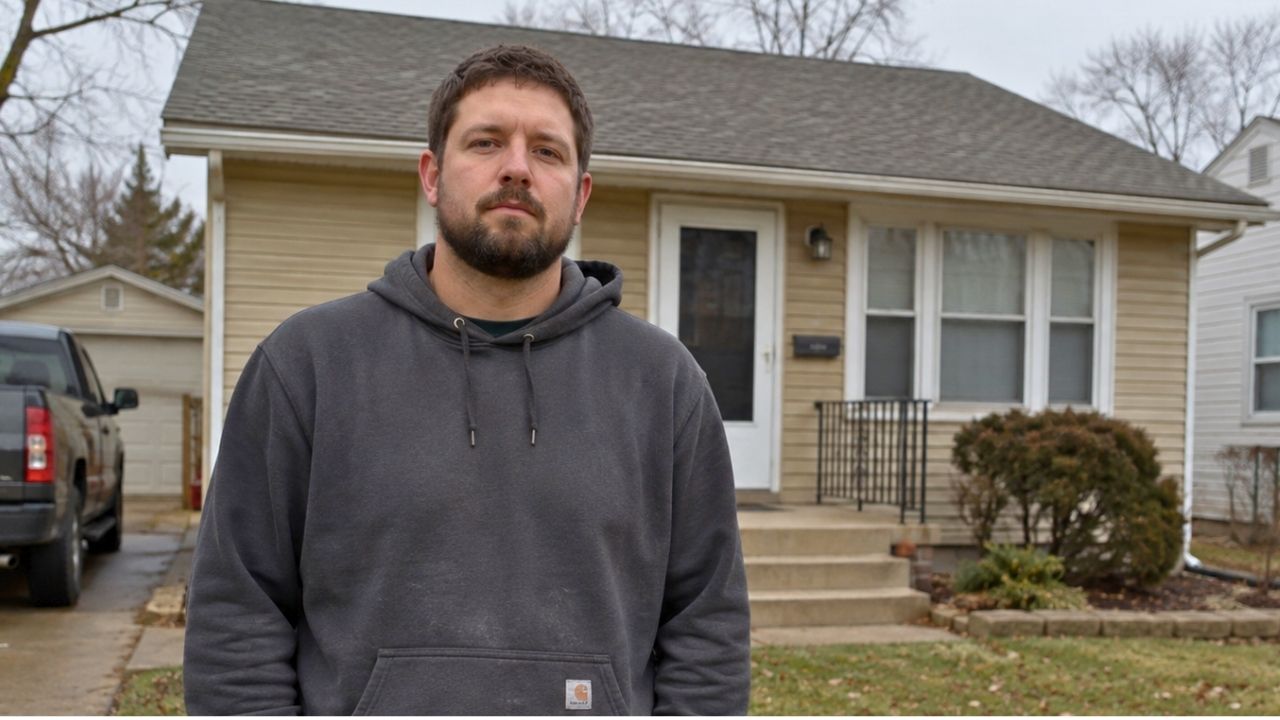
Dallas homeowners face a confusing property tax picture: The city has lowered its tax rate while expecting millions more in revenue, Dallas County is asking voters to approve an increase, and Texas lawmakers are considering additional homestead exemptions that could reduce school district taxes.
These decisions involve separate taxing authorities, meaning homeowners could receive tax relief from one government while paying more to another. With Dallas County Proposition A on the November 3 ballot, the question is whether future savings will outweigh increases elsewhere.
Dallas City Manager Kimberly Bizor Tolbert proposed a fiscal year 2026-27 budget without raising the city’s property tax rate, as The Dallas Express previously reported.
The Dallas City Council subsequently approved a rate of $0.6978 per $100 of assessed valuation on September 16, down from $0.6988 the previous year.
Despite that reduction, the city’s budget projects approximately $76.3 million more in current-year property tax revenue, a 4.8% increase over the prior year’s levy, according to official records.
About $27.4 million of that increase is attributable to newly added property.
The approved rate also exceeds the city’s calculated no-new-revenue rate of $0.662063.
In practical terms, Dallas lowered its rate but expects to collect more property tax revenue overall. Whether individual homeowners pay more depends on changes in their taxable property values and exemptions.
Dallas County voters will decide November 3 whether to approve a rate of $0.248650 per $100 of taxable property value.
That compares with $0.215500 in 2025 and the county’s 2026 voter-approval rate of $0.224650, according to official county tax records.
The proposed rate is 3.315 cents higher than last year’s actual rate and 2.4 cents above the 2026 voter-approval rate.
For a property with a county taxable value of $300,000, the proposed rate would cost approximately $99.45 more annually than the 2025 rate, assuming its taxable value remained unchanged.
Of that amount, $72 represents the increase above the 2026 voter-approval rate.
A “yes” vote on Proposition A would approve the additional 2.4-cent increase. A “no” vote would reject that additional increase but would not restore the lower 2025 rate.
Dallas County estimates the additional 2.4 cents would generate approximately $102.9 million for programs intended to reduce homelessness, resolve encampments, expand mental health treatment, and provide housing assistance.
The county’s official tax notice also projects a $189.4 million increase in overall property tax revenue under its fiscal year 2027 budget, a 22.51% increase over the preceding budget.
County Judge Clay Jenkins and Commissioners Theresa Daniel and Andrew Sommerman supported placing Proposition A on the ballot. Commissioners John Wiley Price and Elba Garcia opposed it.
The proposal has drawn differing assessments in The Dallas Express.
Barry Wernick, the Republican nominee for Dallas County Commissioner District 2, argued in an October 9 column that the county should address spending oversight before increasing taxes.
Mark Nunneley, who independently tracks downtown Dallas homelessness, supported the proposal in an October 15 column, citing reductions in his downtown street counts and the potential to expand services.
Texas lawmakers are considering additional school property tax relief, but those proposals would not directly reduce Dallas County or City of Dallas taxes.
The current statewide general school district homestead exemption is $140,000. Qualifying homeowners age 65 or older or with disabilities receive an additional $60,000 exemption, according to the Texas comptroller.
As The Dallas Express previously examined, one potential reform would increase the general exemption to $200,000 for qualifying primary residences.
Lt. Gov. Dan Patrick has outlined a different proposal, calling for a $180,000 school homestead exemption for homeowners under 55 and $240,000 for qualifying older homeowners. He also wants to lower the eligibility age for school property tax ceilings from 65 to 55.
Neither proposal has become law.
Potentially, but the outcome depends on the homeowner.
Consider a hypothetical $400,000 residence with a school district tax rate of $1 per $100 of taxable value.
Increasing the general school exemption from $140,000 to $200,000 would save approximately $600 annually in school taxes, assuming the property value and tax rate remained unchanged.
Separately, if the property’s Dallas County taxable value were $320,000, the additional 2.4 cents associated with Proposition A would cost approximately $76.80 annually compared with the county’s voter-approval rate.
Under those assumptions, the hypothetical school tax savings would exceed that portion of the county increase by approximately $523 annually.
However, the school exemption increase remains a proposal, while the county election concerns the 2026 tax year. The figures cannot be treated as guaranteed savings on the same tax bill.
The calculation also excludes other rate changes, property valuations, and taxes imposed by additional taxing entities.
Homeowners qualifying for expanded school exemptions could receive direct tax savings if lawmakers approve the changes.
However, qualifying older homeowners already receiving substantial exemptions or school tax ceilings may see smaller additional reductions.
Renters and commercial property owners generally do not qualify for residential homestead exemptions, although they may still be affected by local property tax increases.
Dallas County would receive additional revenue if Proposition A passes, while the proposed spending would support homelessness, mental health, and housing programs.
State lawmakers would also need to account for the school funding affected by any additional statewide exemptions.
Some Dallas voters will encounter two separate measures labeled Proposition A on the November 3 ballot.
Dallas County Proposition A concerns the proposed county property tax increase.
The separate City of Dallas Proposition A would authorize $443 million in general obligation bonds for public safety facilities, including police training, emergency operations, evidence storage, and a crime laboratory, according to the city’s official proposal.
The city estimates total repayment, including principal and interest, at approximately $629.6 million over no more than 20 years.
Although the city says the bond program is not expected to increase its property tax rate, state law requires the ballot to identify the bond measure as a tax increase.
The two proposals involve different government entities and different spending purposes.
A lower tax rate does not necessarily produce a lower tax bill. Rising taxable property values can increase what homeowners owe even when governments reduce their rates.
Likewise, larger school district exemptions do not prevent cities, counties, or other taxing entities from increasing taxes.
The total property tax bill across all applicable jurisdictions determines whether an individual homeowner pays more or less.
Early voting continues through Friday, October 30. Election Day is Tuesday, November 3, with polls open from 7 a.m. to 7 p.m., according to an October 27 announcement from the Texas Secretary of State.
For Dallas County voters, Proposition A is the immediate decision. Additional statewide property tax relief would require action during the 2027 legislative session and, where necessary, voter approval.
Until then, proposed school property tax reductions are not guaranteed, and homeowners must consider their total tax obligations rather than any single announced rate cut.
Provided by Dallas Express


